


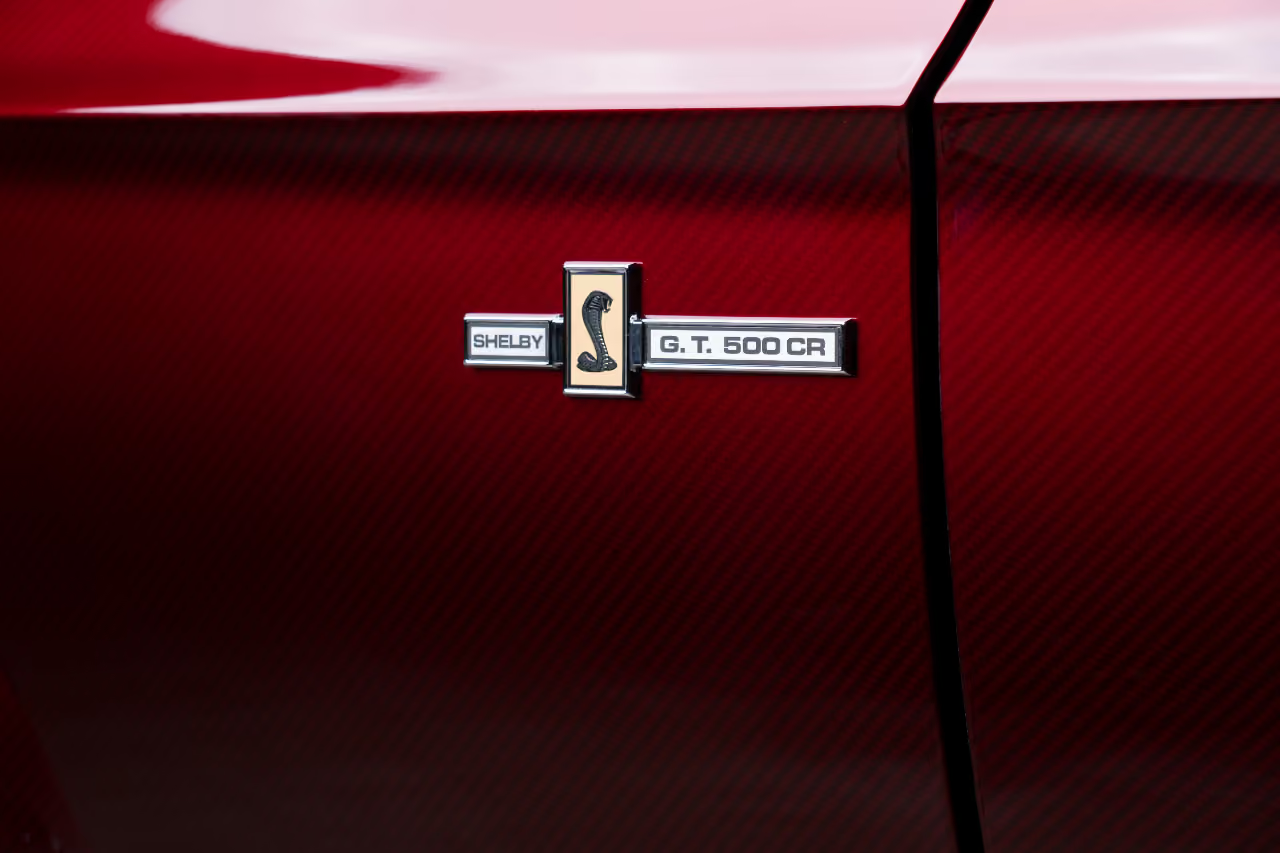
What Is Carbon Fiber—and Why Classic Recreations Uses It
Carbon fiber is a lightweight, ultra-strong composite material used in modern performance cars to reduce weight, increase stiffness, and improve long-term durability. In simple terms, it allows vehicles to be stronger than steel while weighing significantly less.
That is why carbon fiber is used in Formula 1 racecars, aerospace engineering, and today’s most advanced supercars.
It is also why Classic Recreations builds the world’s first and only officially licensed carbon fiber Shelby Mustangs.
What Is Carbon Fiber?
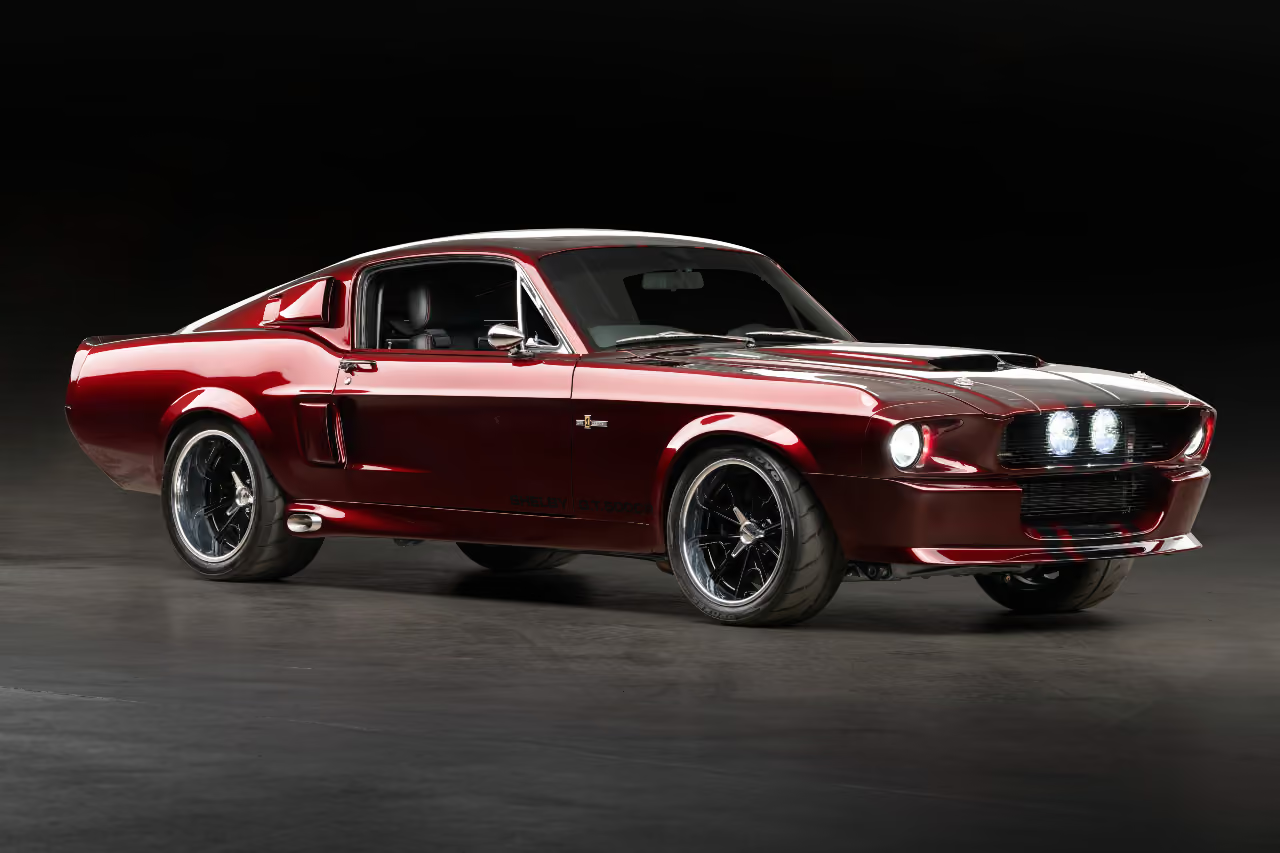
Carbon fiber is made from extremely thin strands of carbon atoms woven together and bonded with resin to form a rigid composite material. Once cured under heat and pressure, the result is a structure that is exceptionally strong, lightweight, and resistant to corrosion.
Unlike traditional steel panels, carbon fiber does not rust. It maintains its structural integrity under stress and resists fatigue over time. While the woven appearance is visually striking, carbon fiber in cars is used primarily for performance and engineering advantages, not decoration.
When people ask, “What is carbon fiber used for in cars?” the answer is simple. It reduces weight while increasing strength.
What Does Carbon Fiber Do for Cars?
Reducing weight improves nearly every aspect of vehicle performance.
When a car sheds unnecessary mass, it accelerates faster, brakes shorter, corners sharper, and responds more precisely to driver input. Engineers refer to this as improving the power-to-weight ratio.
For perspective:
- A traditional steel hood can weigh 50 to 60 pounds
- A carbon fiber equivalent can weigh 15 to 20 pounds
- A full carbon fiber body can reduce hundreds of pounds compared to steel construction
Less weight also means less stress on suspension, braking systems, and drivetrain components, improving longevity.
This is why carbon fiber cars dominate the supercar and hypercar segments and why high-end collectors increasingly value carbon fiber body cars built with structural integrity.
What Does Carbon Fiber Do for Cars?
Reducing weight improves nearly every aspect of vehicle performance.
When a car sheds unnecessary mass, it accelerates faster, brakes shorter, corners sharper, and responds more precisely to driver input. Engineers refer to this as improving the power-to-weight ratio.
For perspective:
- A traditional steel hood can weigh 50 to 60 pounds
- A carbon fiber equivalent can weigh 15 to 20 pounds
- A full carbon fiber body can reduce hundreds of pounds compared to steel construction
Less weight also means less stress on suspension, braking systems, and drivetrain components, improving longevity.
This is why carbon fiber cars dominate the supercar and hypercar segments and why high-end collectors increasingly value carbon fiber body cars built with structural integrity.
Benefits of Carbon Fiber in Cars

The benefits of carbon fiber extend well beyond weight savings.
Strength and Stiffness
Carbon fiber can offer comparable or greater strength than steel at a fraction of the weight, increasing chassis rigidity and structural stability.
Corrosion Resistance
Unlike steel, carbon fiber does not rust, making it ideal for long-term collector ownership.
Durability
Carbon fiber resists fatigue and maintains its shape under extreme stress and temperature variation.
Vibration Dampening
Carbon fiber absorbs vibration differently than metal, contributing to a more refined and controlled driving experience.
Interior Applications
Carbon fiber in car interior components provides structural strength while maintaining a premium tactile finish when used thoughtfully.
Carbon on cars, when applied with engineering purpose rather than cosmetic excess, represents modern performance done correctly.
How Carbon Fiber Is Made
Carbon fiber begins as a precursor material that is heated, stretched, and refined until tightly bonded carbon atoms remain. These fibers are woven into sheets and layered according to specific structural requirements.
The layers are then cured under heat and pressure in an autoclave, a precision-controlled process that ensures proper weave alignment and structural consistency.
This labor-intensive manufacturing method is a major factor behind carbon fiber car price. However, it is also why carbon fiber performs so consistently over time.
When properly engineered and cured, carbon fiber becomes one of the most advanced structural materials available in automotive construction.
Carbon Fiber Car Price: Why It Costs More
Carbon fiber cars require significantly more time, precision, and craftsmanship than traditional steel builds.
Each panel must be:
- Hand-laid for proper fiber orientation
- Precisely layered for strength requirements
- Autoclave-cured under controlled heat and pressure
- Finished to exacting standards
The result is a body that is lighter, stronger, and more corrosion-resistant than steel without compromising structural integrity.
For collectors, carbon fiber is not simply about performance. It is about longevity, engineering credibility, and build quality that stands the test of time.
Why Classic Recreations Builds Carbon Fiber Shelby Mustangs
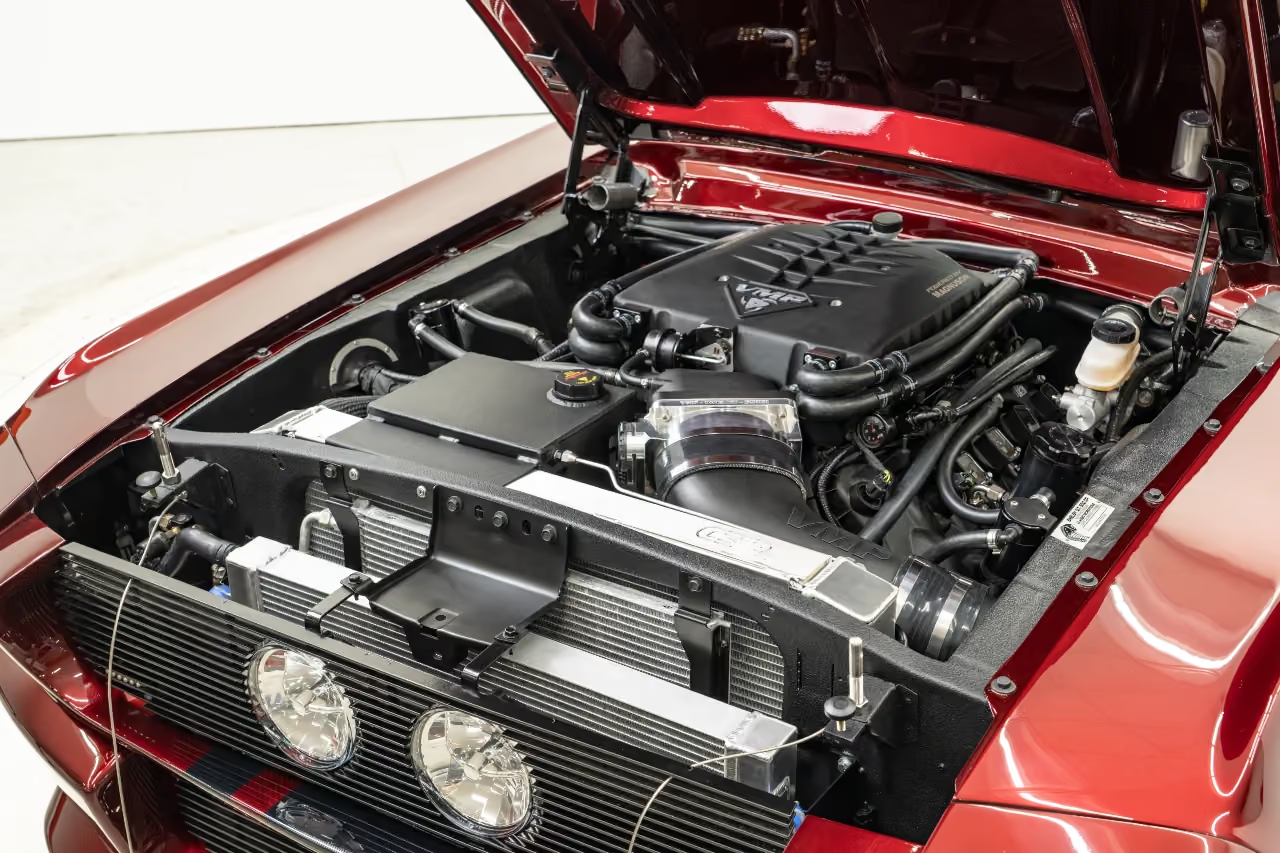
Carroll Shelby’s original philosophy was simple. Reduce weight, increase power, and improve handling.
Classic Recreations honors that mindset by building the world’s only officially licensed carbon fiber body Shelby Mustangs, including the GT500CR. These vehicles maintain the iconic silhouette of the classic Mustang while integrating modern materials for improved strength, safety, and performance.
Our carbon fiber bodies are engineered with restraint and purpose. The goal is not to modernize the design visually, but to enhance its structural capability beneath the surface.
This balance between modern engineering and vintage authenticity defines Classic Recreations.
Collector Perspective: Engineering Over Trend
Some collectors question whether modern composites dilute authenticity. In reality, when applied thoughtfully and under official licensing, carbon fiber strengthens the platform while preserving its heritage.
Carbon fiber cars built with documentation, limited production numbers, and structural integrity are increasingly respected as long-term assets.
When engineered correctly, carbon fiber is not a trend. It is an evolution.
FAQs About Carbon Fiber Cars
What does carbon fiber do for cars?
It reduces weight while increasing strength, which improves acceleration, braking, handling, and overall responsiveness.
What is carbon fiber used for in cars?
It is used for complete body panels, structural reinforcements, and select interior components where durability and strength are critical.
Are cars made of carbon fiber safe?
Yes. When properly engineered and autoclave-cured, carbon fiber offers exceptional structural strength and crash performance.
Does carbon fiber affect long-term ownership?
Yes. Carbon fiber does not rust, resists fatigue, and maintains structural integrity over time, making it well suited for collector vehicles.
Why is carbon fiber car price higher?
The material and manufacturing process require specialized craftsmanship, precise layering, and autoclave curing. This increases production cost but delivers long-term performance and durability benefits.
Experience Carbon Fiber the Right Way
Classic Recreations builds officially licensed carbon fiber Shelby Mustangs that honor vintage design while integrating modern engineering beneath the surface.
Explore available builds or request a consultation to learn more about our carbon fiber continuation models.