

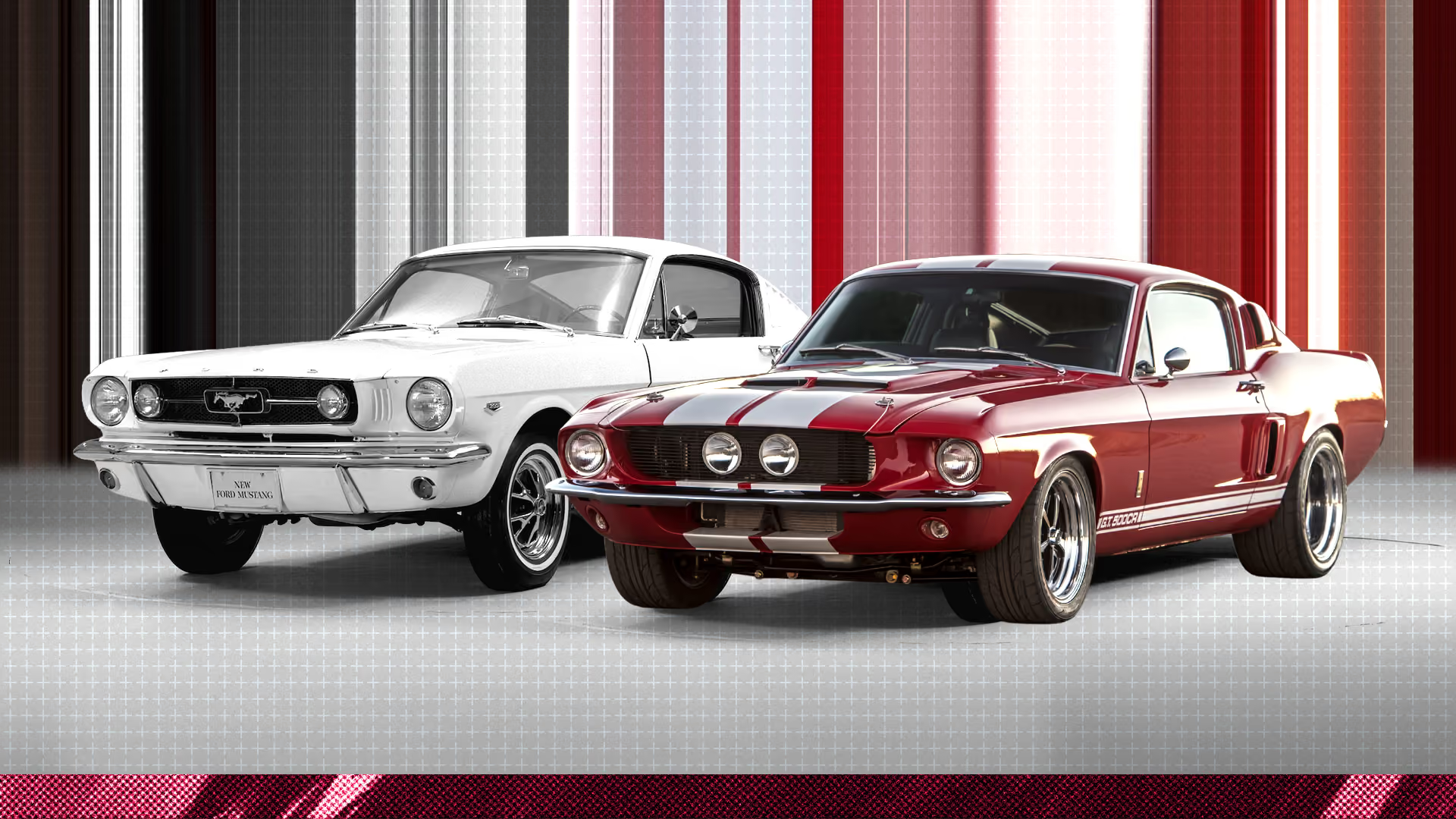
Shelby Mustang Paint Colors: The History Behind Every Iconic Shade
Every shade carries weight — motorsport heritage, period accuracy, personal identity, all bound up in a single decision. To understand why choosing a color still matters this much, you have to go back to how Shelby American went from a monochromatic homologation special to a lineup as bold and varied as the muscle car era itself.
Explore Shelby Continuation Models
1965: One Color, By Design
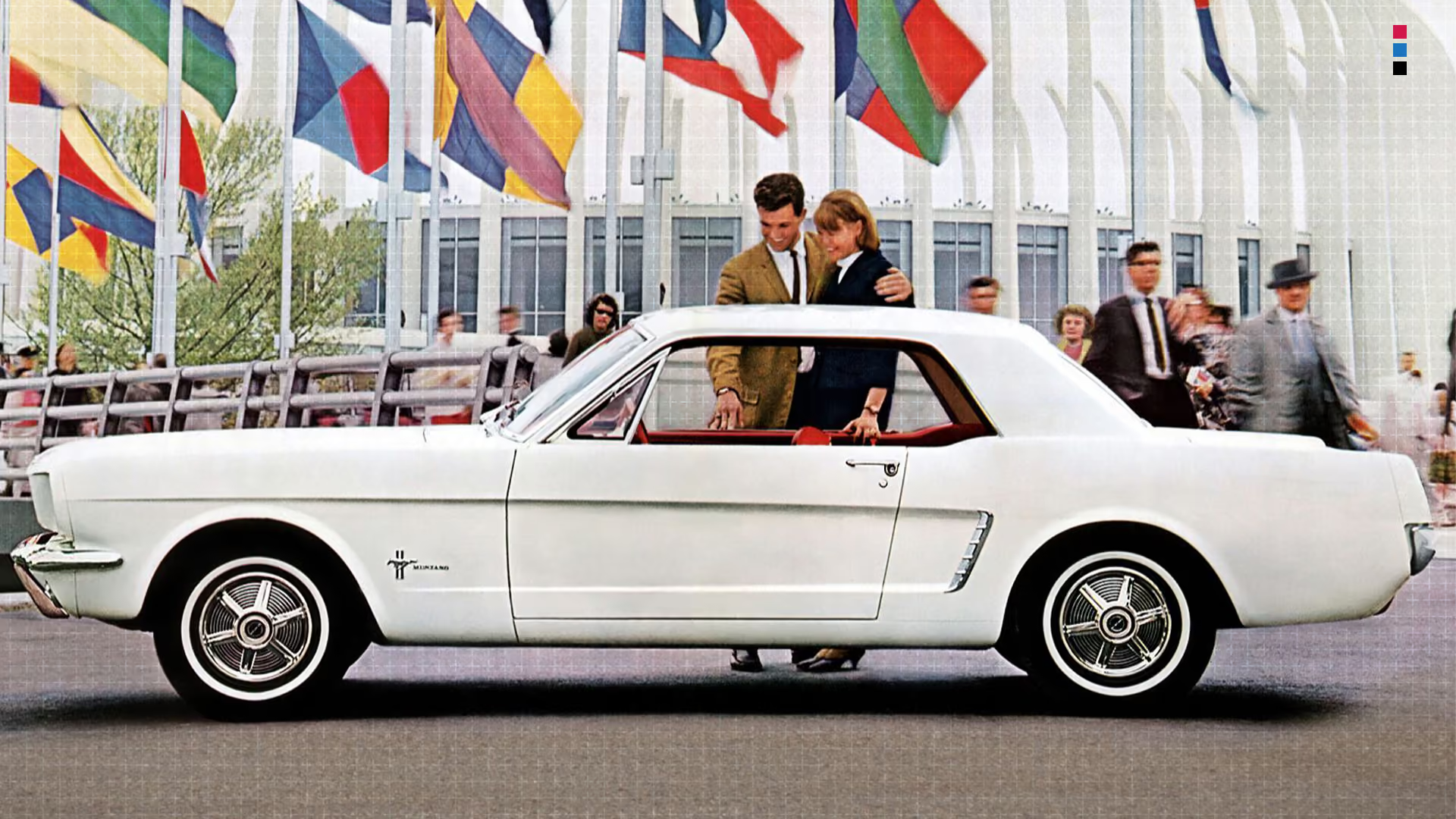
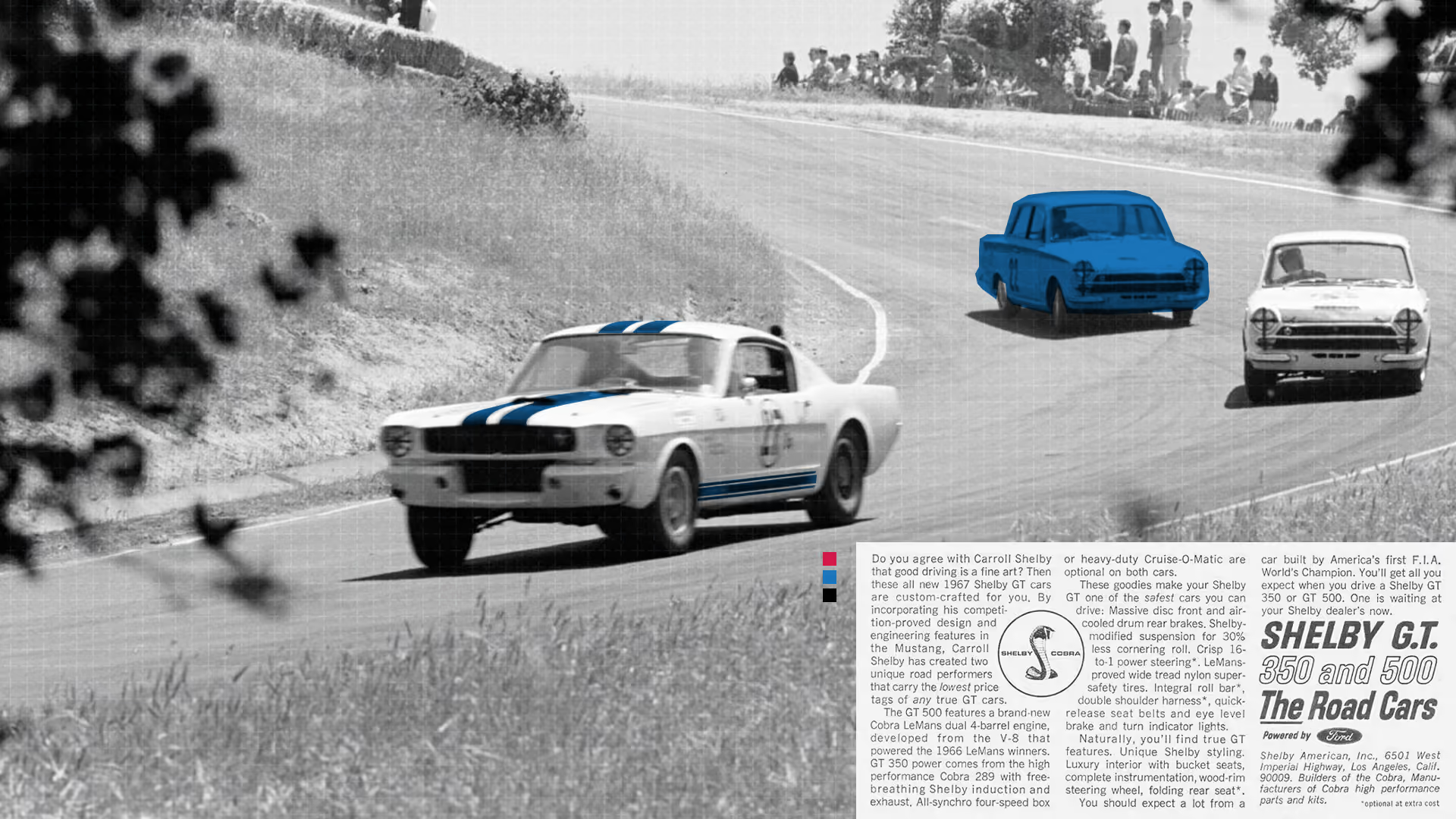
If you walked into a dealership in 1965, the color conversation was short. You could have any shade you wanted, as long as it was Wimbledon White (paint code M) with Guardsman Blue rocker panel stripes.
The early GT350 was a street-legal SCCA B-Production race car first, a showroom car second. Shelby American wasn’t chasing variety — it was chasing wins.
Even the white-and-blue pairing wasn't arbitrary. It echoed the FIA’s' international racing livery for the United States, made famous in the 1950s by driver and team owner Briggs Cunningham.
Buyers who wanted the LeMans stripes — the iconic twin racing stripes running front to back — had them dealer-installed, not factory-applied. And the stripes carried a secret: they were tapered, narrower at the front valance and wider over the roof and rear decklid, to counter an optical illusion that made the car look pinched at speed.
1966: Color Arrives, Courtesy of Hertz and the "Rent-A-Racer" Legacy
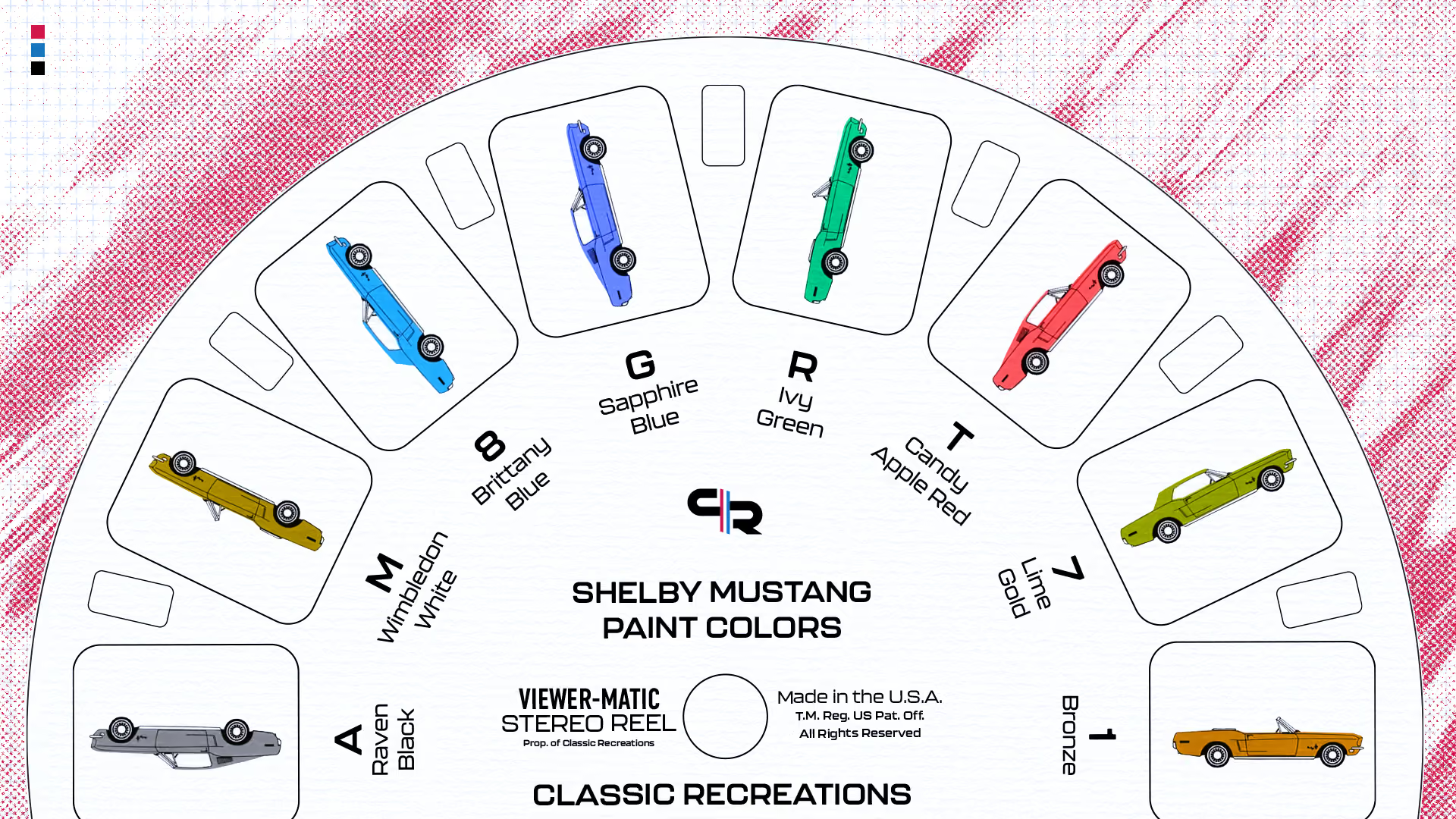
By 1966, Shelby knew everyday buyers wanted options. The catalog grew to five core colors: Wimbledon White, Raven Black, Sapphire Blue, Ivy Green, and Candy Apple Red.
The same year, Carroll Shelby struck a deal with Hertz Rent-A-Car that became one of the most famous chapters in Shelby history: the GT350H, or "Rent-A-Racer." Hertz ordered roughly 1,000 cars, most finished in Raven Black with gold Le Mans stripes — Hertz's signature color combination.
For $17 a day, weekend racers could rent a 306-horsepower track car, run it Saturday, and return it Monday. A smaller number of GT350Hs also went out in Sapphire Blue, Ivy Green, and Wimbledon White, all wearing the same gold stripes.
1967–1970: The Rainbow Era
When Ford redesigned the Mustang in 1967 to fit big-block power like the 428 V8 in the GT500, the Shelby color palette exploded. Ten factory hues joined the lineup, including Dark Moss Green, Brittany Blue, Lime Gold, Acapulco Blue, Medium Gray, and Bronze.
This era produced some of the rarest paint jobs — including the one-of-one 1967 GT500 "Super Snake," a factory prototype built around a 600-horsepower GT40 Mk II engine for a Goodyear tire test. To set it apart from production cars, Shelby applied triple Guardsman Blue LeMans stripes over Wimbledon White. Decades later, that detail helped the Super Snake sell for $2.2 million at auction.
By the end of the decade, colors like shades like Grabber Green, Grabber Orange, and Competition Red had taken over — loud, unapologetic shades for a loud, unapologetic era of American muscle.
Choosing a Color for a Modern Continuation Build
That history is exactly why choosing paint for a Classic Recreations build takes more thought than it looks like it should. Every officially licensed continuation car sits at the intersection of heritage and modern craftsmanship.
Do you stay true to the factory lineage with an exact reproduction of a 1967 Dark Moss Green? Or use modern multi-stage paint and carbon fiber bodywork to execute that same shade with a depth and durability Shelby American’s original crew never had access to?
A continuation build doesn't force a choice between eras — it lets you combine them. A flawless coat of 1966 Sapphire Blue can carry modern metallic accents, custom stripe widths, or exposed carbon-weave highlights, without losing the shade's original identity.
Every Shade Is Part of the Story
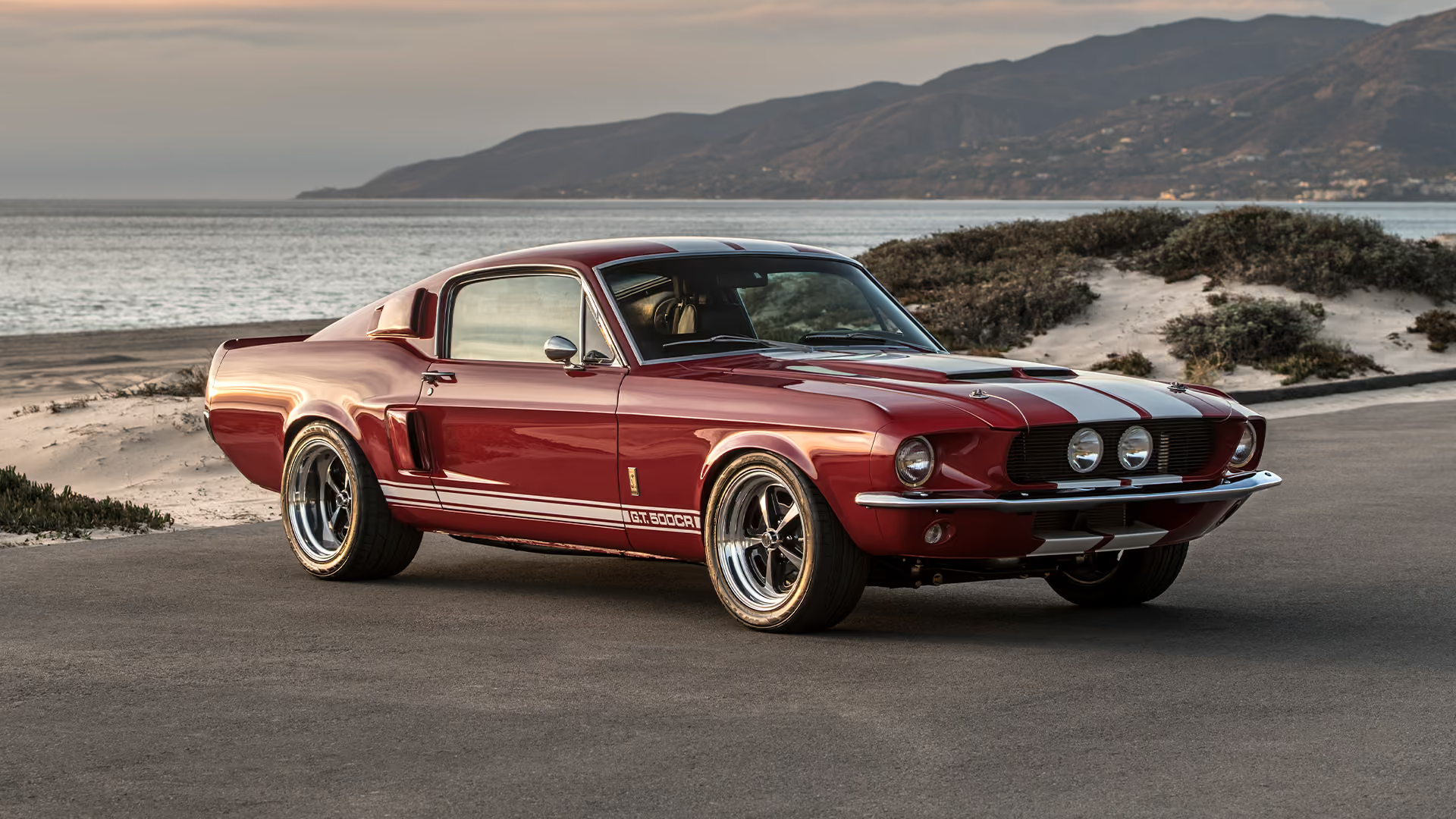
At Classic Recreations, every officially licensed Shelby Mustang carries a piece of this history forward. Whether you choose the single-minded purity of 1965 Wimbledon White, the aggressive contrast of a '66 Hertz build, or a bespoke colorway built around Ford's own legacy, the color isn't just a finish.
It's the next chapter.
Explore Models Connect With The Team
Frequently Asked Questions
What color was the original 1965 Shelby GT350?
The original 1965 GT350 was available in a single factory color, Wimbledon White (paint code M), with Guardsman Blue rocker panel stripes.
What colors were available on Shelby GT350H "Rent-A-Racer" models?
Most GT350H models built for Hertz in 1966 were finished in Raven Black with gold Le Mans stripes, though a smaller number were built in Sapphire Blue, Ivy Green, and Wimbledon White.
Can I choose a custom paint color for a Classic Recreations build?
Yes. Classic Recreations builds allow for exact reproductions of factory-correct historical colors, as well as custom colorways using modern multi-stage paint and carbon fiber bodywork.